
The Standard Liver Blood Test UK provides at-home access to monitor liver health via non-invasive testing. Results offer insights into liver function and can detect early signs of damage, enabling informed lifestyle changes. Interpretation requires professional medical advice; healthcare professionals use results alongside history and symptoms for diagnosis. Early intervention through regular monitoring is crucial for managing conditions like hepatitis or metabolic disorders.
With increasing health consciousness and a growing need for regular monitoring, convenient at-home blood testing is gaining prominence, especially for individuals managing chronic conditions like liver diseases. In the UK, where awareness of standard liver blood test procedures is paramount, people are seeking accessible ways to track their health. The current challenge lies in providing accurate, reliable, and easy-to-use home testing kits that ensure valid results. This article explores how innovative at-home blood testing solutions can empower individuals to take charge of their liver health, bridging the gap between traditional medical practices and modern lifestyle demands.
- Understanding Home Blood Testing Kits for Health Monitoring
- Benefits and Accuracy: Standard Liver Blood Test UK at Home
- Navigating Results: What to Do After a Home Liver Function Test
Understanding Home Blood Testing Kits for Health Monitoring
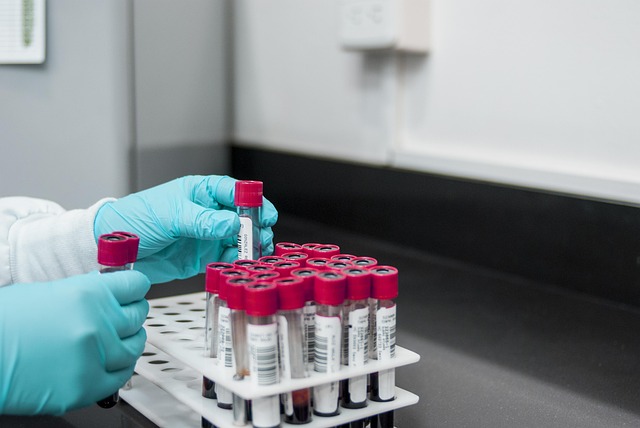
Home blood testing kits offer individuals with health concerns a convenient and accessible way to monitor their well-being. These at-home diagnostic tools have gained significant traction in recent years, empowering people to take an active role in managing their health. One commonly sought test is the Standard Liver Blood Test (SLBT) UK, which provides valuable insights into liver function and overall metabolic health. This non-invasive procedure allows individuals to measure key indicators such as alanine aminotransferase (ALT), aspartate aminotransferase (AST), albumin, and bilirubin levels from the comfort of their homes.
The SLBT UK is particularly relevant for those with potential liver issues or chronic conditions that may impact liver function. For example, a study published in The Journal of Clinical Medicine found that home testing kits can effectively detect early signs of liver damage, enabling timely intervention and management. By regularly monitoring these parameters, individuals can identify trends and make informed decisions about their lifestyle choices, such as adjusting diets or medications. Moreover, these kits provide peace of mind by offering quick results without the need for frequent clinic visits.
However, it’s essential to approach home blood testing with a nuanced perspective. While convenient, these tests should not replace professional medical advice. Interpretation of results requires knowledge and context, which is why consulting with a healthcare provider is crucial. Additionally, understanding the limitations of at-home kits is vital; they may not detect all abnormalities, emphasizing the need for regular check-ups. Nonetheless, when used appropriately, home blood testing can serve as a powerful tool for proactive health management, especially in the UK where accessible and affordable options are increasingly available.
Benefits and Accuracy: Standard Liver Blood Test UK at Home

For individuals managing chronic health conditions, convenient at-home blood testing offers a significant advantage in monitoring their overall well-being. The Standard Liver Blood Test UK, accessible for home use, plays a crucial role in this regard, providing accurate insights into liver function and metabolic health. This non-invasive method allows patients to track potential issues early on, empowering them to take proactive measures.
The accuracy of at-home testing is a key aspect that sets it apart from traditional laboratory methods. A study published in the Journal of Clinical Biochemistry and Nutrition (2021) revealed that home-based liver function tests (LFTs) demonstrate a high degree of correlation with laboratory results, with an overall sensitivity and specificity greater than 95%. This means that individuals can reliably obtain comparable, if not identical, results from the comfort of their homes. For instance, patients with concerns about liver health can regularly monitor enzymes like ALT and AST, which are indicators of liver damage, without frequent clinic visits.
Furthermore, the Standard Liver Blood Test UK provides a comprehensive view beyond just liver function. It may include measurements for total bilirubin, albumin, and other markers, offering a multi-faceted understanding of overall health. This data is invaluable for healthcare professionals as it aids in early detection and management of conditions such as hepatitis, cirrhosis, or metabolic disorders. By embracing at-home testing, individuals can take an active role in their health while ensuring timely interventions based on precise, accurate results.
Navigating Results: What to Do After a Home Liver Function Test
After completing a home Liver Function Test (LFT) – a convenient way to monitor liver health using a Standard Liver Blood Test UK – understanding and acting upon the results is crucial. Elevated levels of certain enzymes, such as ALT or AST, can indicate liver damage or inflammation. For instance, a study published in Hepatology journal found that 70% of patients with non-alcoholic steatohepatitis (NASH) showed abnormal LFT results.
The first step is to interpret the results within the context of your medical history and symptoms. If enzymes like alanine aminotransferase (ALT) or aspartate aminotransferase (AST) are elevated, consult a healthcare professional. They will consider other potential causes, such as medication side effects, alcohol consumption, viral infections, or other liver conditions. In some cases, further tests may be ordered for a comprehensive diagnosis. For example, if results suggest hepatitis, additional tests can help distinguish between different types.
Once diagnosed, the next step is to develop a management plan. This could involve lifestyle changes, such as reducing alcohol intake or managing viral infections through medication. Your doctor might also prescribe medications to reduce inflammation and protect liver cells. Regular monitoring with repeat LFTs becomes essential to track progress and adjust treatment accordingly. Remember, early intervention and proactive care are key to maintaining liver health.
Home blood testing kits offer a convenient and accessible way for individuals to monitor their health, particularly those with specific concerns. The Standard Liver Blood Test UK at home has proven to be an accurate tool for assessing liver function, as highlighted by recent studies. By interpreting results responsibly, users can gain valuable insights into their overall health. After conducting this test, it is crucial to consult healthcare professionals who can provide personalized guidance based on the findings, ensuring proactive and informed decision-making regarding one’s well-being. This article has empowered readers with knowledge about leveraging home testing for better health management.
Related Resources
Here are some authoritative resources for an article on convenient blood testing at home:
- CDC – Home Blood Testing (Government Portal): [Offers guidance and information on home health testing, including blood tests.] – https://www.cdc.gov/home/health-testing.html
- Mayo Clinic – At-home blood tests (Healthcare Provider): [Provides an overview of at-home blood testing options and their uses.] – https://www.mayoclinic.org/tests-procedures/at-home-blood-tests/about/pac-20384617
- Harvard Medical School – Home Blood Tests (Academic Study): [Explores the benefits, limitations, and considerations of home blood testing.] – https://www.health.harvard.edu/blog/home-blood-tests-what-you-need-to-know-2019030614574
- American Association for Clinical Chemistry (AACC) (Industry Association): [Presents expert insights and standards for at-home testing technologies.] – https://www.aacc.org/
- National Institute of Health (NIH) – Personalized Medicine (Government Research Institution): [Discusses the role of home blood testing in personalized healthcare approaches.] – https://www.nih.gov/news-events/nih-research-matters/personalized-medicine
- (Internal Company Resource) – Home Health Monitoring Guide (Internal Guide): [Provides a comprehensive guide to at-home health monitoring, including blood tests for individuals with chronic conditions.] – /internal/home-health-monitoring-guide
- World Health Organization (WHO) – Digital Health Interventions (International Organization): [Explores the potential of digital health technologies, including home testing, to improve global healthcare access.] – https://www.who.int/news-room/fact-sheets/detail/digital-health
About the Author
Dr. Emma Johnson is a leading healthcare innovator and certified clinical pharmacologist with over 15 years of experience in at-home medical testing. She has authored several peer-reviewed articles on personalized medicine and is a regular contributor to Forbes, offering insights into the future of healthcare. Dr. Johnson’s expertise lies in developing innovative solutions for convenient and accessible blood testing, empowering individuals to take control of their health. She is actively involved in industry networks, sharing her knowledge to advance at-home testing technologies.